HOPE AI Explained: Google’s Leap in Adaptive Intelligence
HOPE AI Explained: Google’s Leap in Adaptive Intelligence
A New Era of AI That Learns, Remembers, and Adapts Continuously
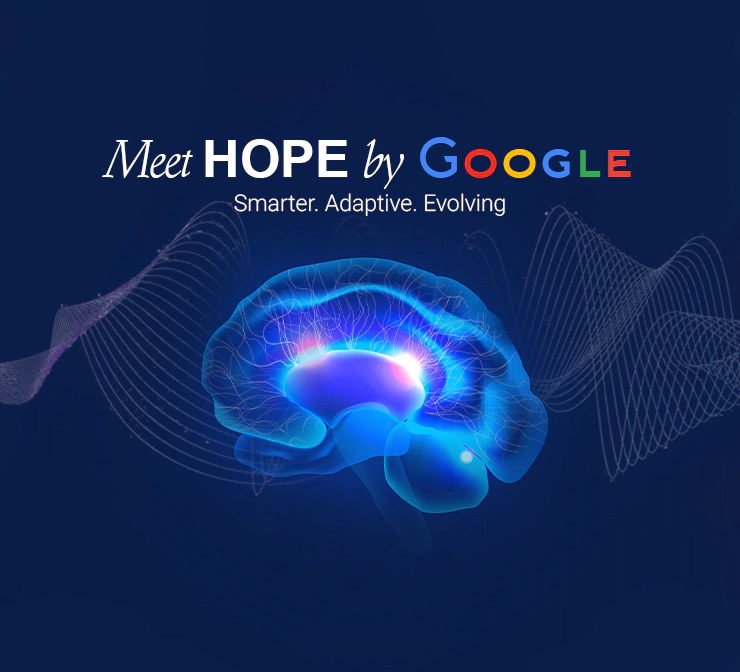
Artificial intelligence is advancing quickly, but one major limitation has always remained; its inability to retain past knowledge while learning new information. Google Research is addressing this challenge with a new AI model called HOPE. Built on the concept of Nested Learning, HOPE introduces a smarter way for machines to learn continuously without forgetting earlier knowledge.
This marks an important step toward AI systems that can adapt and improve over time, similar to how humans learn.
Why Traditional AI Struggles to Remember
Most AI models today are trained on large datasets, but when updated with new information, they often lose previously learned knowledge. This issue is known as catastrophic forgetting.
It is similar to learning something new and suddenly losing access to older memories. This limitation prevents AI from evolving efficiently, as updates can weaken existing understanding.
A Smarter Approach with Nested Learning
To overcome this, Google developed the Nested Learning framework. Instead of treating learning as a single process, it breaks it into interconnected layers that work together.
Different parts of the system learn at different speeds. Some focus on short-term updates, while others maintain long-term memory. This balance helps the model retain past knowledge while adapting to new information.
Nested Learning also combines model design and training into a unified system, allowing smoother and more effective learning.
HOPE: A Self-Adapting AI Model
HOPE is the first model built on this framework. It is designed to learn continuously, refine its knowledge, and adapt without losing important information.
It includes a multi-level memory system that stores both immediate and long-term data. The model also prioritizes important information, ensuring that useful knowledge is retained while less relevant data is filtered out.
This makes HOPE a self-improving system capable of evolving over time.
Why HOPE Matters for the Future of AI
HOPE improves memory and reasoning, especially in tasks that require understanding long pieces of information. It can learn new tasks without forgetting previous ones, which is a major step toward more reliable AI systems.
It also enhances efficiency by learning faster and making fewer errors. By linking new knowledge with existing information, it creates a more adaptive and intelligent system.
A Step Toward Human-Like Intelligence
HOPE reflects how humans learn by building on past experiences rather than replacing them. This allows the model to evolve continuously and handle complex tasks more effectively.
Such advancements could improve digital assistants, research tools, and autonomous systems that need to learn in real time.
A Breakthrough That Brings AI Closer to Human-Like Intelligence
HOPE represents a shift from static AI models to systems that grow and adapt continuously. As this technology develops, it could lead to smarter AI that learns naturally, remembers effectively, and responds better to new challenges.
This marks the beginning of a future where AI not only processes information but improves and evolves over time.
Latest Posts